Rural Energy Academy

NACo’s Rural Energy Academy empowers county leaders with information and support to make energy decisions that work best for their communities. Rising energy demand, technological advances, changes in federal policy and increased attention on rural areas with advantageous wind, solar and land resources has created a meet-the-moment opportunity for rural counties interested in exploring or expanding their energy potential.
In 2026, NACo’s Rural Energy Academy will focus on helping rural county leaders navigate development and siting of wind, solar, battery storage and data centers and whether they are right for their residents, economies and natural resources. In partnership with the National Association of Development Organizations (NADO), this initiative supports rural counties by providing:
- Energizing Counties Resource Hub - resources tailored to county considerations
- Energy Counties Exchange - a virtual community platform for peer engagement
- Peer Exchange - site visits to rural energy communities
- Technical Assistance - individual and group-based technical assistance to solve a local challenge
2026 Program Calendar At A Glance
- February-May
- February 22-May 28 - Rural Energy Academy technical assistance cohort
- June-July:
- June 29-July 1 - Rural Energy Academy peer exchange event focused on nuclear and battery energy storage systems
- August:
- September:
- December:
- December 14-16- Rural Energy Academy peer exchange event focused on data centers.
Connect with Our Team
If you are interested in participating with the REA or would like to access resources, peer learning or technical assistance for your county, click the button below. If you are an external organization that would like to connect with NACo about this program click here.
Peer Learning
Applications for the 2026 NACo Data Center Peer Exchange are now closed.
In December 2026, NACo will host the Data Center Peer Exchange in Dorchester County, S.C. This event is co-sponsored by Google through NACo’s Rural Energy Academy (REA). This unique one-and-a-half-day event will offer county leaders the opportunity to connect with peers from communities hosting Google data centers, tour local data center facilities, hear from experts, exchange best practices and explore solutions to shared challenges and opportunities related to data center development.
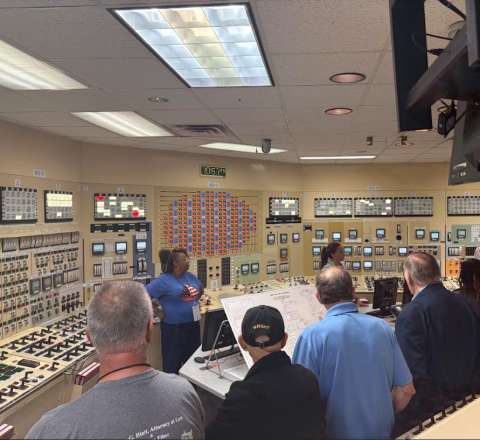
In June and July of 2026, NACo co-hosted a Rural Energy Academy peer exchange with Grundy County, Illinois. Home to the Dresden Generating Station, one of the nation's earliest privately financed nuclear power plants, Grundy County offered a fitting setting for a program focused on nuclear energy and battery energy storage systems (BESS). This immersive two-and-a-half-day event blended peer learning, expert insights from Argonne National Laboratory and a tour of an operating nuclear facility. Key themes explored:
- Battery energy storage system (BESS) science and safety
- Nuclear energy and small modular reactors
- Economic development and community benefits
- Strategies to maximize county authority
- State and federal energy policy
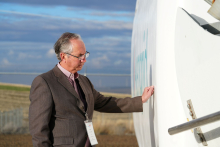
In December 2025, NACo co-hosted the first Rural Energy Academy peer exchange with Gilliam, Wasco and Sherman Counties, Oregon. These agricultural counties on the Columbia Plateau have decades of experience navigating the complexities of siting wind energy projects while reaping local benefits and are applying lessons learned to emerging solar projects and engagement with local data centers. This immersive one-and-a-half-day event blends peer learning, expert insights and tours of energy projects. Key themes explored:
- Siting and permitting of wind and solar
- Energy generation economics and workforce training
- Data centers
- Community benefits
- Community and developer engagement
Energy Counties Exchange
Technical Assistance
Cohort-based Technical Assistance
This program convenes rural leaders for a three-month technical assistance sprint to help counties navigate energy-related challenges based on their community’s unique resources and priorities. In partnership with Mana Group Consulting, this program provides counties with synchronous and asynchronous learning, one-on-one technical assistance and peer learning.
To view the syllabus and participating counties from the completed 2026 cohort, or to indicate interest in applying for the 2027 cohort, use the dropdowns below.
NACo will continue to offer a Rural Energy Academy Technical Assistance Cohort program in 2027. The application period will be open during the month of January, for an anticipated program period between March and May.
To indicate interest in the upcoming cohort and be among the first to receive the application please complete this form here.
For more information on the syllabus, strategies and counties that participated in 2026, please use the dropdown below.
The first Rural Energy Academy (REA) Technical Assistance Cohort was launched at the 2026 Legislative Conference. The cohort ran from Feb. 22- May 28 and focused on supporting the following counties in achieving energy development goals. View the program syllabus here and explore below how county leaders are turning lessons and conversations into action.
- Apache County, Ariz. is using REA lessons to strengthen engagement with state partners, improve local energy policies and pursue community benefit agreements that help ensure future projects support schools, local infrastructure and long-term economic development. The county created a regional leadership forum bringing together county officials, municipalities and economic development partners to coordinate responses to proposed renewable energy projects.
- Beaverhead County, Mont. is applying REA engagement strategies to build public support for transmission infrastructure needed to unlock future energy development. The county is working with project partners on expansion opportunities tied to the 80-megawatt Clēnera solar project, which was developed without tax abatement and is one of the county’s largest taxpayers.
- Botetourt County, Va. is applying REA lessons and strategies to secure new commitments for public engagement related to a data center campus expected to be built over multiple phases. County leaders are establishing plans for public meetings, community outreach, direct mail communications and ongoing project updates, helping create a long-term transparency and engagement model for major development projects.
- Chaves County, N.M. is using REA participation to build foundational knowledge around renewable energy development, community benefits and long-term project planning. County leaders are incorporating lessons to better understand community needs and more effectively negotiate the future workforce and economic benefits for taxpayers while enhancing decommissioning and reclamation protections.
- Colusa County, Calif. is launching efforts to engage agricultural landowners, fire districts, utility providers, developers and other stakeholders as it develops its first utility-scale solar energy ordinance. REA participation helped county leaders strengthen expectations for siting, safety and agricultural protections. The county is also exploring updates to its economic development strategy and impact fee program to address large-scale renewable energy development.
- Grant County, Wash. is applying REA lessons to review and refine renewable energy regulations, including updates to solar ordinances and policy considerations tied to an active wind energy moratorium. The county is incorporating REA insights into ordinance revisions to strengthen its long-term approach to renewable energy siting, regulation and community planning.
- Jack County, Texas is leveraging REA lessons to strengthen proactive public engagement, regional collaboration and long-term infrastructure planning as energy development accelerates. Home to a natural gas generation facility, four wind farms, two solar projects and multiple 345-kV transmission corridors, the county is preparing for growing interest in data center development. The county has hosted public meetings with peer officials and a nearby water conservation district to inform and identify mechanisms to strengthen standards.
- Lyon County, Nev. is developing the county's first data center ordinance using lessons learned through REA interaction with peer counties and subject matter experts. As applications for solar projects and data center campuses continue to increase, Lyon County leaders are applying updated renewable energy standards to active projects while exploring an energy overlay district and community benefit agreement frameworks to ensure future development aligns with rural character and delivers long-term local benefits.
- Marathon County, Wis. is using REA engagement strategies like creating the Alternative Energy Project Local Impact Advisory Committee to gather input and inform energy ordinances and specific projects. The county approved an updated BESS ordinance to increase public safety. However, in Wisconsin, not all projects fall under county authority, so Marathon County also developed an energy ordinance that requires developers to share engineering plans with enough time for the county to review them and file comments on projects under state review.
- Morrow County, Ore. is applying REA lessons as the county manages simultaneous proposals for tens of thousands of acres of solar development, more than 1,000 acres of data centers and over 50 miles of transmission infrastructure. County leaders are advancing a comprehensive approach that emphasizes co-location of energy generation, transmission and large power users, while advancing agrivoltaics, strengthening decommissioning requirements and developing long-term renewable energy recycling strategies to help “close the loop” on future solar development.
- Olmsted County, Minn. is advancing a comprehensive stakeholder engagement and education strategy to support its new $52 million Materials Recovery Facility, which is expected to help the county achieve its 75% recycling goal. Drawing on REA lessons, county leaders developed a six-part outreach strategy that includes public awareness campaigns, school programs, legislative engagement, workshops and on-site education. County leaders are also pursuing ordinance updates to better prepare for future renewable energy and data center development.
Related Resources & Initiatives

Energizing Counties Resource Hub
NACo empowers counties with the tools and resources needed to consider and facilitate energy projects best suited for local communities. NACo is developing resources and tailored guidance to assist local governments in navigating the opportunities and challenges of different energy industries.
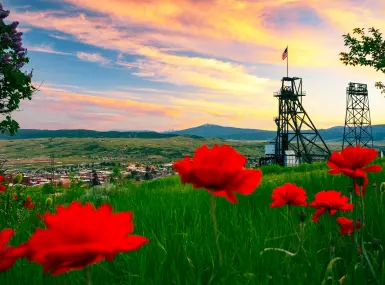
Building Resilient Economies in Coal Communities
The Building Resilient Economies in Coal Communities initiative connected coal communities, supported local leaders and built capacity in under-resourced communities to advance new approaches and projects for economic diversification.

Data Centers Resource Hub
As local authority shapes decisions on permitting, infrastructure planning and community engagement for data centers, this dynamic hub turns ideas into practice across key areas, giving county leaders practical tools to support local decision making around development and long-term economic growth.
Project Contacts

Blake Gardiner

Carleigh Haris

Jennifer Jenkins

New BRECC Toolkit: Coal Communities’ Pathways for Economic Diversification
Join the BRECC National Network to learn how coal counties are diversifying their economies through increasing housing supply, providing innovative workforce development opportunities and revitalizing downtowns.

Eastern Tennessee counties collaborate on nuclear energy ambitions
Decades after the Manhattan Project, cooperation among Roane, Anderson and Knox counties in Tennessee drives toward a high profile for nuclear power.
Intended Use
This content is intended for educational purposes only. The National Association of Counties (NACo) supports policies and programs that equip county governments with the resources and flexibility needed to serve our residents. NACo does not endorse any particular strategy or approach shared in this resource over another. For official NACo positions, please refer to the American County Platform.