Meet the NACo second vice president candidates
Upcoming Events
Related News

Three county officials have declared their candidacy for the office of NACo second vice president. The election will take place July 20 at the Annual Business Meeting during NACo's Annual Conference in Orleans Parish, La.
All three candidates have responded to County News’ survey, their answers are presented here.
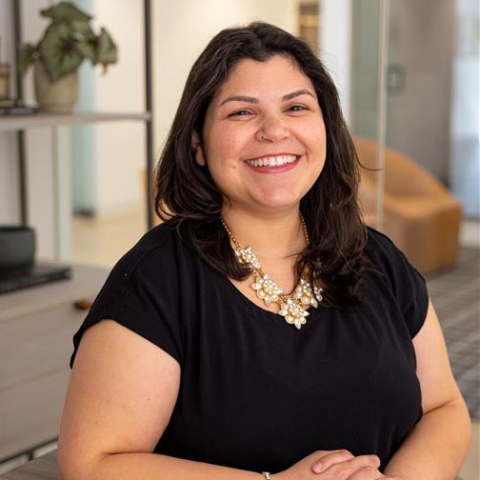
Sarah Bentar
County Treasurer
Cooconino County, Ariz.
Why are you interested in serving as a NACo officer?
I believe that counties remain a blueprint for leadership rooted in local control, fiscal responsibility, and solutions that meet communities where they are. My interest in serving as a NACo officer is founded on a lifelong commitment to public service and a deep desire to bring my leadership experience to strengthen the organization and advocate for all members. Over the years, I have had the privilege of serving in numerous national and state leadership roles, including:
- Vice Chair, NACo Finance, Pensions, and Intergovernmental Affairs Policy Steering Committee
- Former Chair, NACo Fiscal Policy & Pensions Subcommittee
- Past President, Arizona Association of Counties (AACo)
- Former Chair, NACo Resilient Counties Advisory Board
- Past Member of NACo Board, Audit Committee, Health Policy Steering Committee, and Human Services & Education Policy Steering Committee
- Past NACo Tally Clerk
- 2023 National Government Financial Professional of the Year by Controllers Council
As the Chief Banking Officer and Chief Investment Officer for my county, I manage critical financial operations that impact every resident. These responsibilities, combined with my national leadership experience, have given me a unique perspective on the challenges and opportunities facing counties of all sizes - rural, midsize, and urban.
The most important reason I am seeking this role is simple: collaboration, advocacy, and the unwavering belief in local control. I believe the future of NACo and our counties must be shaped by listening, engaging, and working together. My goal is to ensure every county’s voice is heard as we build a stronger, more resilient future for the communities we serve.
What do you consider to be the two or three most important challenges facing NACo in the near future on which the Officers/Executive Committee/Board of Directors should focus? Why?
One of the most pressing challenges facing NACo in the near future is fiscal sustainability. Counties are responsible for delivering essential services—public safety, health care, infrastructure, and social programs—yet their revenue streams remain rigid and highly sensitive to economic cycles. Today, fiscal stress is coming from multiple directions. Aging infrastructure and capital needs, such as roads, bridges, and public facilities, require significant investment. At the same time, counties are experiencing rising demand for behavioral health services, homelessness programs, and Medicaid administration, all of which are chronically underfunded. Increased costs for labor, materials, and operations only compound these pressures.
Nationwide policy shifts are also creating uncertainty around tax revenues and access to federal funding, while cost shifts to states are placing additional burdens on local governments. For example, legislation such as HR 1 illustrates how fiscal responsibilities are increasingly being pushed down to counties without corresponding resources. These trends require counties to find creative solutions to maintain service levels while ensuring long-term fiscal stability. NACo
must lead efforts to advocate for flexible funding, modernize revenue systems, and develop strategic financial planning tools to help counties navigate these challenges.
The second major challenge is preserving local control. Counties are facing growing threats to their decision-making authority, from contract negotiations and funding allocations to land-use decisions that impact ranchers and rural economies. When state or federal mandates undermine local priorities, communities lose the ability to shape policies that reflect their unique needs.
Ensuring that county officials retain the ability to make decisions on issues such as resource management, economic development, and service delivery is critical to maintaining strong, resilient communities. NACo should continue to champion local authority and emphasize that when counties decide, communities thrive.
What do you consider to have been your most important contributions to the National Association of Counties to date? What do you consider to have been your most important contributions to your state association of counties?
My most important contribution to the National Association of Counties has been advancing inclusive, fiscally responsible leadership that strengthens counties’ ability to serve their residents. I have worked to elevate diverse county voices within NACo, build strategic partnerships, and ensure national policies reflect the unique needs of local communities.
Through my national leadership, I have championed local control and fiscal responsibility for all counties.
For example, I was invited to testify before the U.S. House Financial Services Committee alongside federal finance regulators as the national expert on local control and fiscal policy. Following that testimony, I brought this expertise to NACo as Chair of the Fiscal Policy and Pensions Subcommittee, and through service on the NACo Board of Directors and Audit Committee, where I helped shape policies that protect counties’ financial stability.
At the state level, my most significant contribution was serving as President of the Arizona Association of Counties, where I strengthened collaboration across counties, advocated for local control, and aligned state policy with on-the-ground realities. During my tenure, I helped secure over $20 million in state appropriations for counties impacted by a property tax refund, ensuring they could maintain essential services.
Across both roles, my focus has been building partnerships, investing strategically, and empowering county leaders—on both sides of the aisle—to deliver better outcomes for our residents.
What measures would you recommend to increase and retain NACo membership and to encourage broad participation in NACo by elected officials and employees of NACo member counties? What specific role would you be willing to assume to help build and sustain membership in NACo?
At a time when counties are facing fiscal uncertainty and affordability challenges, NACo must demonstrate its value in ways that attract new members and strengthen engagement. One of the most effective strategies is expanding outreach to non-member counties through a robust ambassador program. By empowering current NACo leaders and members to serve as ambassadors, we can build relationships, share success stories, and create a personal connection that highlights the tangible benefits of membership.
In addition, NACo should consider developing programming and resources that are exclusive to members while offering limited access to non-members at a reduced cost or trial basis. This approach allows non-member counties to experience NACo’s value firsthand—whether through policy briefings, best-practice sessions, or leadership development—before committing to full membership. Creating these “preview opportunities” can help non-members understand that membership is an investment, overcome barriers to participation, and make joining NACo an easier decision.
As a County Treasurer with extensive experience in fiscal management and service on NACo’s Audit Committee, I understand the importance of financial sustainability for both counties and NACo itself. I would take an active role in expanding the ambassador program, reaching out to non-member counties, and working with NACo leadership to design strategic engagement opportunities that demonstrate NACo’s unique value. By listening to counties’ needs and tailoring resources accordingly, we can grow membership and ensure NACo remains the united voice for all counties.
When counties decide, communities thrive—and by strengthening NACo’s membership, we empower counties to make decisions that drive prosperity for every community across the nation.

Matthew Prochaska
Circuit Clerk
Kendall County, Ill.
Why are you interested in serving as a NACo officer?
I strongly believe NACo’s strength is in its ability to build bridges between different groups. Throughout my career in county government, I have seen firsthand how NACo brings together diverse perspectives and develop practical solutions and elevate the voice of counties.
My involvement within NACo has reinforced the importance of a “county to county” connection and collaboration. We all understand counties face difficult challenges; where we succeed is when we learn from each other and work together. As NACo’s Second Vice President I will continue building those bridges, strengthening those connections and collaborations, and ensuring NACo continues to support the existing bridges between large and small counties, and rural and urban communities.
NACo’s officers play a critical role in uniting members, fostering trust, and creating space for productive discussions. I am committed to helping build bridges within our Association and with our federal partners, so counties are better equipped to meet today’s challenges and prepared for what lies ahead.
What do you consider to be the two or three most important challenges facing NACo in the near future on which the Officers/Executive Committee/Board of Directors should focus? Why?
One of the most important challenges facing NACo is to continue strengthening and expanding NACo Edge as a reliable, value-driven resource for counties, and also a steady stream of non-dues revenue for our Association. Counties face ongoing fiscal pressures and NACo Edge has the potential to expand practical, cost-saving solutions for county government and our residents, while also providing NACo with sustainable income supporting advocacy, education, and member services. Continued focus on growth, innovation, and accountability within NACo Edge will help ensure it delivers clear value to our counties and long-term stability for our Association.
At a time of increasing political polarization in Washington, NACo’s role as a solutions-oriented, nonpartisan, organization will become even more important. NACo is most effective when it minimizes conflict, calms the waters and remains focused on shared county priorities. The Officers, Executive Committee, and Board of Directors must continue fostering an environment that encourages respectful discussions, collaboration between members, and consensus-building across all lines.
What do you consider to have been your most important contributions to the National Association of Counties to date? What do you consider to have been your most important contributions to your state association of counties?
My contributions to the NACo have been centered on strengthening our Association through membership growth, sound governance, innovation and collaboration and bridge-building. I served as NACo’s Membership Chair for three years, helping our Association reach an all-time membership high, and one of the best retention rates ever. We did this by working closely with our state associations and our county leaders across the country to expand engagement and reinforce the value of NACo membership.
I served as NACo Parliamentarian and on the Credentials Committee, where I helped ensure a fair, transparent, and orderly governance processes for NACo. These roles require trust, neutrality, and an ability to bring people together, reinforcing NACo’s role as a nonpartisan, solutions-focused organization.
I serve as President of the Illinois State Association of Counties (ISACo) and continue to serve as a Board Member of both ISACo and the United Counties Council of Illinois (UCCI) . In those roles, I have worked diligently to bring the two Associations closer together through shared programming, joint efforts on legislation in our state capital, Commissioner to Commissioner relations and presenting a more unified voice for counties in Illinois.
Across both my NACo and state service, my focus has been on building bridges, strengthening institutions, and ensuring county officials of all backgrounds and regions feel engaged, respected, and represented. This approach has guided my leadership and shaped my contributions to both NACo and my state associations.
What measures would you recommend to increase and retain NACo membership and to encourage broad participation in NACo by elected officials and employees of NACo member counties? What specific role would you be willing to assume to help build and sustain membership in NACo?
Relationship building and succession planning! To increase and retain NACo membership, our Association must communicate both the financial value of being a NACo member, but also the value each individual Commissioner (and staff member) brings to the table by their participation. We must encourage active NACo members to involve other people from their county in NACo and introducing them to the friendships and learning experiences NACo offers. By doing this we will not only increase NACo participation, but also help with the succession planning needed for the next generation of active NACo members from every county.
NACo provides clear financial advantages through advocacy, education, and programs such as NACo Edge, but membership is strongest only when multiple people from each county are actively involved. When only one person is engaged from a county, that county is “at-risk”, and may not continue participating in the future. Institutional knowledge about what NACo offers must not be in one the hands of only one person. How many times have we seen the one active member from a county retire, and because no one else from that county has been involved, that county stops participating.
NACo must continue proving its financial value for counties but also encourage a Commissioner-to-Commissioner outreach that builds bridges and engages county leaders. This outreach should include not only Commissioners and Executives, but also countywide elected officers such as Sheriffs, Clerks, Treasurers, County Attorneys, Engineers and Coroners, and as importantly the staff from our counties. Encouraging participation across offices and roles will help ensure NACo will continue to reflect everything county government does, and also make sure several people from each county are involved in NACo.
I tried to use this approach as NACo Membership Chairman when NACo reached an all-time high in membership, and also one of its strongest retention rates ever. We did this by emphasizing both the tangible financial benefits of being a NACo member, but also the need for engagement through state associations and county leadership.
As NACo’s 2nd Vice President I will continue serving as an ambassador for NACo to every county, parish and borough in America. I will promote multi-person participation from each county, encourage other county wide elected officers to participate alongside legislative and executive leaders, and help connect members to programs and leadership opportunities that sustain long-term involvement.
My focus will always be on building bridges: connecting counties to resources, to one another, and to a strong, durable National Association of Counties.
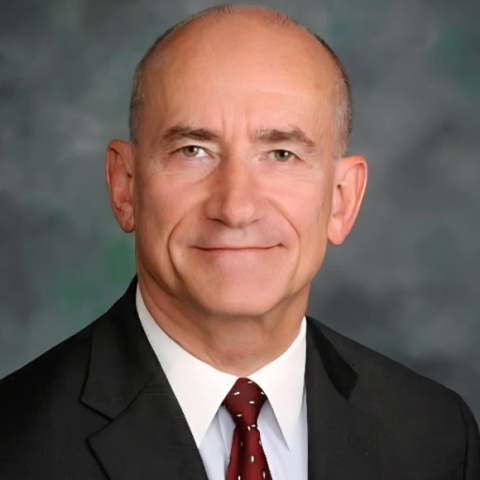
Mike Turner
Vice-Chair
Loudoun County, Va. Board of Supervisors
Why are you interested in serving as a NACo officer?
I’ve spent my entire life in public service, first as a U.S. Air Force officer, helicopter pilot and fighter pilot for 28 years, then as a development officer (fundraiser) in six different national nonprofit organizations, and finally, as a Loudoun County, VA elected official. I can say without hesitation, being the Ashburn District Supervisor and Vice Chair of the Loudoun County Board of Supervisors is the most deeply satisfying and rewarding job I’ve ever had.
I want to contribute, and at this moment in NACo history, I believe my contribution to NACo leadership and NACo members can make a real difference.
I have made lasting, positive changes in every organization I’ve belonged to. During my final assignment in the military, I wrote a proposal for a concept to build an African peacekeeping force that ultimately trained more than 250,000 peacekeepers and became the largest U.S. foreign assistance program to Africa in history.
While serving in several national nonprofit organizations, I created three major donor annual giving programs to establish a steady, predictable flow of unrestricted donations in support of each organization’s operations. These programs have raised millions of dollars for these organizations and still exist today.
I believe every one of America’s counties are now facing or will soon face some of the most complex and challenging issues they’ve ever encountered regarding the unprecedented growth of data centers. They are going to turn to and rely on NACo leadership for answers and support.
Over the past two years I’ve done extensive research into the historic growth of data centers and the concomitant exponential growth in demand for energy to process data nationwide. As an elected Supervisor in Loudoun County, VA, home to the world’s highest concentration of data centers, I felt I had an overarching responsibility to understand this phenomenon and its potential impact on my constituents. My research led to my authorship of a white paper tracing that growth in Loudoun County, exploring all aspects of the issue within the data center/energy sectors and providing in-depth analysis from an elected official’s point of view of what may lie ahead for all of us. You may download the paper and a one-page data center “Best Practices” sheet for communities considering data centers at www.Loudoun.gov/Ashburn.
I believe we are entering a second Industrial Revolution. As the nation’s leading voice representing our 3,069 counties, I feel strongly NACo must take an informed and assertive national leadership role on this issue, an issue I expect to dominate the national discussion for the foreseeable future for all our members. My work in this area has garnered considerable national and international attention. I believe I am uniquely well-qualified to lead NACo during these historic times.
What do you consider to be the two or three most important challenges facing NACo in the near future on which the Officers/Executive Committee/Board of Directors should focus? Why?
First, as stated above, exponential data center growth and the resulting exponential increase in demand for power to accommodate that growth are impacting, or will impact within the next five years, every county in America. Every data center/power issue our members will face will be unique to their county, shaped and influenced by local ordinances, land-use best practices, history and culture. As data center growth and power demand grows, so too will pressure on state and federal governments to respond, often without regard for uniquely local considerations. NACo, the leading national voice for counties, can best serve them by ensuring all levels of government work collaboratively in support of sustainable, local solutions. As NACo members have always believed, the role of state and federal governments must be to empower smart local decisions. That has never been truer than today amidst such historic changes in the data center sector.
This same trend is happening with housing as a result of the nationwide, affordable housing shortage. While localities are working to find innovative housing solutions, many state and local governments are now considering programs that would force localities to build homes “by right” without regard to the negative impacts on critical, local infrastructure. NACo, through a united, common effort by its members, must continue to assert its leadership role on the issue of housing affordability by advocating for local housing solutions appropriate to each community.
Finally, NACo must continue to be a unifying voice for our counties and reflect, through them, ethical, compassionate and principled national leadership during one of the most divisive and challenging times in our nation’s history. Such principled leadership was expected of me as a senior military officer, and my NACo membership has simply reaffirmed these core values.
When I was first elected, I, like most Americans, thought of government as a pyramid of influence and power, with the federal government at the top, state government in the middle, and county government at the bottom. After six years as a county Supervisor, I’ve come to realize this hierarchy is exactly reversed. County elected and appointed officials are the frontlines of American Democracy. We do more in one week to improve the quality of life of our constituents than our state and federal representatives do in a year. Never in my lifetime has it been so important for American citizens to see and hear their local elected officials demonstrating every day in their local communities the highest ideals and aspirations of American Democracy: compassion, fairness, respect, self-sacrifice, decency, non-partisanship, honesty, and so much more. In these turbulent times in our nation, NACo must be a clarion voice of reason, optimism and hope, a shining testament to those principles which have made America the most enduring democracy in human history.
What do you consider to have been your most important contributions to the National Association of Counties to date? What do you consider to have been your most important contributions to your state association of counties?
I have been appointed Chair of the Environment, Energy and Land Use Committees (EELU) of both NACo and the Virginia Association of Counties. As the NACo EELU Chair, I designed a 10-month training syllabus addressing every aspect of data center/power grid growth, microgrid development, alternative energy sources, energy storage and power generation, transmission and distribution to educate and inform our members. I believe it’s essential every county official become an expert on all aspects of these highly complex challenges.
What measures would you recommend to increase and retain NACo membership and to encourage broad participation in NACo by elected officials and employees of NACo member counties? What specific role would you be willing to assume to help build and sustain membership in NACo?
For over two years, through an entirely organic process and word-of-mouth, I have been invited to participate in seminars and on panels to assist county officials from across the country facing serious data center challenges. These include the County Commissioners Association of Pennsylvania (site visit), the Association of County Commissioners of Georgia (webinar), and dozens of one-on-one virtual meetings with county elected officials throughout the nation to answer questions about our Loudoun County, VA experiences.
I believe this same process offers NACo an extraordinary opportunity to grow membership. Every community in America is going to have to grapple with these same historic challenges over the next five years, and county officials who have become experts on data center/power issues are going to lead the way. No organization in America is better positioned and better suited to educate, empower and inform local officials on these issues than NACo.
I would be honored to continue my work travelling, participating in and hosting events and activities specifically designed to empower our NACo members to become community experts and to invite others to join the NACo team as a means of better serving their communities. Indeed, I can’t think of a better role for a NACo 2nd Vice President.

Closing the knowledge gap, recognizing the silent successes of county officials
“The Achievement Awards give us the ingredients to share our daily work. Every winner is a story already written by the work itself. Yet it must be amplified and validated,” writes NACo CEO Matt Chase.

NACo President Dunlap challenges counties to improve lives of children
Upon being elected NACo president, Mecklenburg County, N.C. Commissioner George Dunlap called on counties to pass resolutions to review their investments in young people and take at least one concrete action to improve their lives.

Dunlap Takes Office as National Association of Counties President
Mecklenburg County, North Carolina Commissioner George Dunlap was sworn in as president of NACo on July 20 at the conclusion of NACo’s 91st Annual Conference in Orleans Parish/New Orleans, La.

Astronaut, Purple Heart recipient to keynote NACo Annual Conference
More than 3,000 county officials and others will converge on New Orleans this week for NACo’s 91st Annual Conference & Exposition, where the nation’s counties will set their federal policy agenda and elect new leadership.

NACo Annual Conference comes to Orleans Parish
Read County News’ coverage of the NACo Annual Conference starting Friday, from steering committee meetings and workshops to General Session speakers and tours of the systems that make Orleans Parish, La. a vibrant place to live and visit.

Announcing 2026 NACo Achievement Award Winners
NACo is pleased to announce the winners for the 2026 Achievement Awards. Explore the Best in Category winners below. For the full listing of this years winners, explore NACo's awards database here.