Capitol tree hails from California counties
Upcoming Events
Related News

Key Takeaways
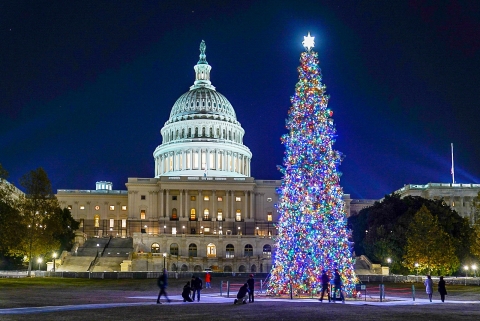
The U.S. Capitol is brimming with rich history and tradition. Since 1964, the U.S. Capitol has celebrated the winter holidays with a titan of a tree decorated and displayed on the Capitol lawn and this year is no different.
This year’s tree, an 84-foot white fir, dubbed “Sugar Bear,” hails from Six Rivers National Forest in northern California, which is partly located in Del Norte, Trinity, Humboldt and Siskiyou counties.
The counties banded together this year to create ornaments and tree skirts for the festivities, sharing traditions that embody Northern California.
Del Norte County Supervisor Valerie Starkey said Del Norte wanted the tree ceremony to be big because it is “a once in a lifetime event” for the children.
Del Norte County 5th grader Michael Mavris lit the tree Dec. 1 in Washington D.C. after winning an essay contest. Del Norte County published a portion of his essay: “As the lights are strung and the ornaments placed, we, the People who live in the tree’s symbolic shadow, hope that its beauty and grandeur provide a beacon to America and a reminder on this Christmas, that all things are possible.”
Each year, the U.S. Forest Service chooses a tree from the 154 national forests across the country. The tradition began when Speaker of the House John McCormack planted a live tree on the Capitol lawn. Eventually the tradition was passed on to the Forest Service and the agency has selected a tree from a different national forest each year.
Courtesy of the Mad River Ranger District in the Six Rivers National Forest, Sugar Bear began its journey across the country on Oct. 23. This year, the tree is accompanied by a 100-foot display that teaches visitors about the importance of caring for their environment.
Community Engagement Manager Samantha Reho has been on the road with the tree since Oct. 23. Reho said it was a mark of pride to have the People’s Tree chosen from California after record-breaking wildfires there.
“The fact that we have a beautiful tree to represent the fortitude and resilience of California during this time is something we’re very proud of.”
Attachments
Related News

U.S. Senators introduce bipartisan bill to reauthorize the Secure Rural Schools program through 2029
U.S. Sens. Mike Crapo (R-Idaho) and Ron Wyden (D-Ore.) introduced the bipartisan Secure Rural Schools Reauthorization Act of 2026 (S. XXXX). The bill would reauthorize the Secure Rural Schools (SRS) program through fiscal year (FY) 2029 and provide critical fiscal certainty for timber-dependent communities in more than 700 counties nationwide that are home to National Forests. The U.S. Forest Service-administered program supports essential government services such as roads, public education and law enforcement.

U.S. Senators introduce bipartisan comprehensive permitting reform package with major county wins
On Sep. 30, the leaders of the U.S. Senate Environment and Public Works Committee and the Senate Energy and Natural Resources Committee introduced the Bipartisan American Affordability and Jobs Act of 2026 (S. 5653), a comprehensive, bipartisan permitting reform package that would make major changes to several federal environmental protection statutes.

Counties Applaud Introduction of Secure Rural Schools (SRS) Reauthorization Act
Over 700 counties receive essential resources supporting education, transportation and public safety through SRS