Hawai'i locals stress planning to avoid extractive tourism


Key Takeaways
As a popular tourist destination, Hawai’i faces a challenge shared by many public lands counties — being loved to death.
That goes for both physical location and the perception. Mitigating the challenges presented by an economy that thrives on visitation takes planning and structure, several Maui County and state officials said during a WIR Conference panel. Failure to do so can degrade communities, slight residents and present a skewed image to the rest of the world.
“Tourism was meant to make life better for people, not worse for people or even impossible,” said Maui County Councilmember Keani Rawlins-Fernandez. “Similar to many of your counties, as one of our main economic drivers there’s a constant struggle to ensure that our community’s needs are what drive the tourism industry and not the other way around.”
Hawai’i saw an extreme case of the pendulum swinging away from tourism in 2020, when the pandemic halted visitation to the islands, where small businesses rely close to 90% on tourism for survival.
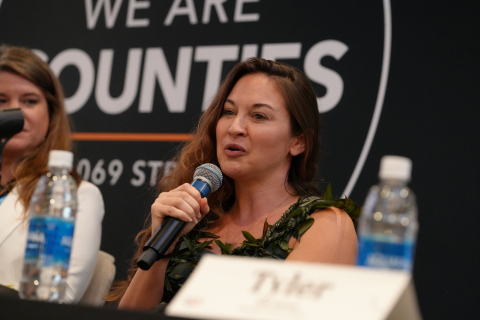
“We know what happens when tourism turns off overnight — economic collapse in the state of Hawai’i, thousands of businesses just completely turned off,” said Tyler Gomes, chief administrator for Hawai’ian Council, a Native Community Development Financial Institution.
Protecting place and perception
Gomes said protecting Hawai’ian culture is paramount, and getting easier as old memories fade. For 100 years, advertising around Hawai’ian tourism was crafted by outsiders, whose ad campaigns distorted most elements of local culture.
“The vision that was crafted around that was entirely false and not based on who we are and what we have to offer,” Gomes said.
Now, the Hawai’ian Council gets to vet what local products are sold to visitors, ensuring that they are consistent with Hawai’ian culture.
“We get to say, ‘That hula skirt that you want made out of grass, that’s not something that we are comfortable vouching for,’ so we’re not going to include that in our marketplace,” he said.
The Hawai’i Department of Land and Natural Resources implemented parking and entry limits for state parks in 2018, motivated by both visitor experience and community interest. Many local communities derive their identity from natural features, so the state reserves entry for local residents.
“A lot of these places were never designed for that amount of access,” said Maui District Superintendent Michael Kahula. “We’re now able to be proactive in a way we can control.”
Additionally, in 2023, Maui County started managing access to beach parks, business districts and heavily trafficked areas. Communities opt in to the parking management program, and its Park Maui application has been popular locally, particularly at the beach parking lots.
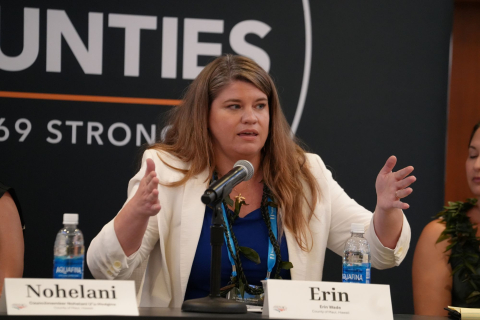
“We’re making sure that they have access to our community, especially in the early morning hours, if they have their ritual – ‘I get up and paddle in the morning,’ or ‘I like to surf before work,’ or ‘I have a baby luau I need to set up for,” said Erin Wade, the county’s deputy managing director. “Any time a community comes to us and says ‘We’re getting relief, we’re over this, we need some management,’ we work and consult with them to find out what their specific needs are and then district by district, it can vary.”
Gomes noted that Honolulu City and County aggressively restricted short-term rentals because they dramatically displaced residents, who left the state entirely. Combatting that was a priority for Honolulu. Maui County also limited vacation rentals in different areas.
“What makes Hawai’i special? Native Hawai’ians,” he said. “Losing longtime local families… the housing market is a really great example of people coming here and experiencing sunrise yoga and all of those things and wanting to have that every single day; that is the ‘love it to death’ demographic.”
Maui County Councilmember Nohelani U‘u-Hodgins has seen her hometown of Paia gentrify drastically, and the social goalposts move with newer arrivals.
“We have this runaway effect where the newest newcomer adapts only to the other newcomers,” she said. “The reality is like we are the litmus for what’s normal in Hawai’i, in Dubai and Paia and all of our towns, so we become fewer and fewer and fewer of us and so the normal changes and the normal is now margaritas and fish tacos and not just poke.”
Visitor compatibility
Rawlins-Fernandez noted that as private owners buy more Hawai’ian land, locals are getting frustrated as they are priced out of their homes. That wariness toward tourism manifested itself on her island of Molokai with signs stating “Visit, spend, go home,” including one that said “visitors not welcome” on the other side.
“I acknowledge that can feel abrasive, but often, the industry will shy away from having those tough discussions, from hearing the community,” she said.
Molokai resisted development in the 1970s, and even now, she said, coming there is like visiting Maui in the 1950s.
The Hawai’i Tourism Authority’s Destination Management Action Plans focus on both attracting ideal visitors and fostering a regenerative tourism model to prevent degradation of local communities.
“These plans can serve as a bridge for bringing people together in a really positive way, people that would have never been in a relationship or had any kind of contractual relationship of any kind before,” said Megan Degaia, the authority’s destination manager.
The plans convene the communities and the tourism industry, including listening sessions and recruiting and working with stewards, who help educate and protect visitors, creating a multi-ethnic coalition.
“When you have stewards in a place, you have a proper place-making happening, where a visitor can show up and be oriented and better recognize and understand the culture and the ecology, the rich history of where they are, the meanings. All the stories of the special place. And then, it’s going to become easier for them to just know how to behave and fit in and assimilate,” she said.
“I think we have a responsibility to pour money into these rural communities and into place-based people to be the ones that are the voice, that are the ones sharing the orientations and you know, funding them, resourcing and elevating and uplifting so that we can see this change that we want to happen.”
Wade praised the opportunity for visitors’ experiences to integrate with daily life for Hawai’ians, such as in Lahaina in Maui County.
“It clearly wasn’t Disney World, because there were real people with real life daily activities happening every single day in Lahaina and that was grounding,” she said. “I think it’s really important you know around the world when you visit a small town to see what their daily life is like and not have it completely removed, not have the visitor experience completely removed from the day-to-day experience.”
As for the ideal visitor level, Gomes said recent trends in visitation are trending toward a more sustainable and manageable level while also optimizing local benefit.
“You ideally want the highest-spending visitor because you get a lower occupancy rate, you get fewer visitors spending [more]. We have more spend in-state since the pandemic than before and we’ve got one [million] maybe two million [fewer] visitors a year, so it’s possible,” he said.
Even with a strained relationship between protecting local resources and residents and benefitting from tourism, there is a way to walk the tightrope spanning those interests.
“I think what it comes down to is the mindset. Everybody here, if you go to visit somebody’s home, it’s real basic, right?” Kahula said. “We take off our shoes, we treat everybody with respect and we don’t take anything, right? The mindset needs to be there. When people can think of themselves as a guest and not a consumer, then everybody has that kind of respect.
“We provide forever memories for everybody and we can take care of these spaces that we want to perpetuate for everyone.”
Related News


Designation period opens July 1 for new Opportunity Zones
Counties active in the Opportunity Zone process are highlighting census tracts that are ready for work to begin and where local, state and national economic development priorities are aligned.

County News
County, Native Americans work together to create ‘cultural tourism’
Coconino County, Ariz. and the Navajo Nation have built a partnership together to create cultural tourism initiatives, both educating visitors on Native American history and traditions and benefiting the local economy.
