Problem:
|
Disabled residents needed a more flexible transit service to accommodate their unscheduled needs
|
Solution:
|
Create a payment program allowing residents to flexibly handle their transit needs while easing the burden on the overall paratransit network
|
Broward County, Fla. has a robust fleet of paratransit vehicles accommodating their disabled residents, carrying out thousands of trips a day. But there is something the system cannot handle: Last-minute changes to their schedules. To compensate, the county introduced the Rider’s Choice program, giving participants the option to use whatever driving service they prefer for short trips within the county.
Introduced as a pilot program in 2018 under supervision by Broward County Transportation Director Paul Strobis, Jr., the Rider’s Choice program allows for flexibility for disabled people.
“Paratransit is a lifeline safety-net program, because a lot of my customers can’t transport themselves or afford private transportation,” Strobis said. “One of the limitations [to paratransit] that has always been in place is that everything must be done in advance…There’s a lot of restrictions to its usage in someone’s daily life.”
The Rider’s Choice program aims to meet three criteria: Enhance the mobility of customers, provide a lower-cost alternative to paratransit and create a new customer base for the local taxi services.
To that end, the county will pay for up to two trips a day through a taxi or driving service instead of having riders preschedule paratransit. The county partnered with a local company called Cab Connect to create a closed-loop taxi payment system through a special payment card that tracks ride parameters to ensure proper usage.
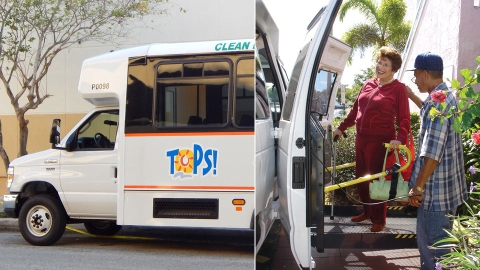
The paratransit network provides door-to-door service with trained personnel assisting the disabled from the entrance of their homes to the entrance of their destinations. The vehicles are equipped to handle wheelchairs and the drivers are trained to assist. Rides are scheduled at least a day in advance so that the computer system can schedule vehicles, combine trips for efficiency and ensure all participants have their needs met. The Riders Choice “regular” program does not use trained personnel.
The county will pay for two trips a day, each no more than $18 a trip, and the participants cannot leave the county. The program grants riders the flexibility to travel for shopping and other immediate needs the regular paratransit network cannot accommodate at a far lower price if they are capable enough to not need additional medical assistance. On average, the cost per trip in Rider’s Choice amounts to $14 a ride while the paratransit trips run closer to $30.
Rider’s Choice programs have appeared across the country. Advocates for transportation for persons with disabilities have implemented similar systems tailored to the needs of each locale. Each programs is somewhat different — sometimes contracting directly with a service provider, creating vouchers, setting no hard limits on trip numbers or allowing users to use up to the full voucher amount for the day or week.
Contracting with Cab Connect allows the county to ensure the funds are being spent in compliance with the rules of the program and allows the county to pay one entity and let Cab Connect handles payments to different services.
With the data collected from Cab Connect and the payment cards, Strobis was able to show that the program could provide more flexibility and more trips at the same cost or lower, ensuring the longevity of the program. “As stewards of public money, we wanted it [Riders Choice] to sustain itself,” he said.
By 2019, the program was in full swing and averaged around 3,500 trips a month; the paratransit program now handles around 60,000 trips a month. Strobis said the cost of the program is essentially paid for by the cost savings of shifting users to Riders Choice. When the pandemic hit in 2020, Strobis said the program lost about half of its riders and has steadily climbed back to 75 percent ridership, roughly 3,000 trips a month. The pilot program has been so successful, with around 700 enrolled, that the Broward County Commissioners last year approved transitioning from a three-year pilot to a full-time program.