Counties can help elderly populations


Key Takeaways
We know that counties provide critical services to all our residents, from the time they are born to the time they grow old. But by 2035, for the first time in our nation’s history, the population of adults 65 and older will outnumber children younger than 18. As our aging populations grow, counties will face new challenges in providing services and resources that help our older adults live independently and remain active parts of our communities.
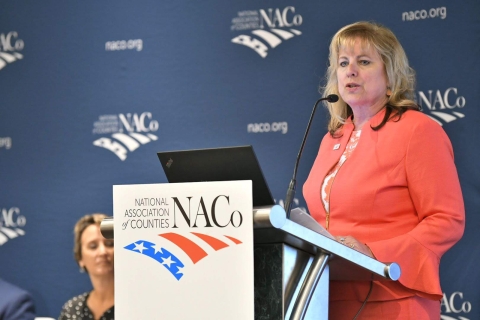
Not only will counties see growing demand for direct services to the elderly in coming years, but we will also be confronted with the need to support their caregivers. As the caregiver for my own two parents — one of whom suffers from Alzheimer’s dementia — I know firsthand just how emotionally, financially and even physically demanding this role can be. For so many of us, caring for older adults and their family members is not just a county issue but a personal reality.
Thankfully, counties are uniquely positioned to provide real support. We operate or provide funding for area agencies on aging to offer transportation, nutrition, home-based care and other services to our seniors. We provide, purchase and administer long-term health care. And of course, we identify challenges on the ground and pursue innovate solutions to address them.
In my home of Douglas County, Nebraska, we know our seniors too often face barriers to accessing the services and care they need, from confusing applications to lack of transportation.
In November, I organized the first-ever Douglas County resource fair for our older residents and their caregivers, allowing them to access information, apply for services, ask questions and receive assistance in one convenient location. Unsurprisingly, the turnout was overwhelming. It reminded us of the important county role in filling gaps in service delivery and providing person-centered outcomes for our residents.
Beyond the services to the elderly we provide on the ground, counties are an essential voice for the aging in the federal policy process. This year, NACo has strongly advocated for legislation like the reauthorization of the Older Americans Act, which increases flexibility and resources so that counties and those we partner with can better understand and meet the needs facing our older population and those caring for them. We have especially highlighted the need for more targeted research funding to combat and prevent diseases like Alzheimer’s and other dementias and mental health conditions.
It has been an honor to champion this important issue as the president of NACo, and I look forward to continuing to do so with your partnership in the coming months.
Attachments
Related News

Counties meet an unprecedented moment in human services
County human services directors are racing to lower SNAP Payment Error Rates, implementing significant eligibility changes and preparing for reduced federal support while building entirely new systems and processes to implement Medicaid work requirements.

U.S. Department of Agriculture announces reorganization
On July 24, 2026, U.S. Secretary of Agriculture Brooke Rollins announced a major reorganization of the U.S. Department of Agriculture (USDA) that will relocate thousands of federal employees, restructure regional offices and consolidate administrative services and operations. The changes are expected to reduce USDA’s footprint in Washington, D.C. and shift more personnel to regional hubs across the country.

Senate Agriculture Committee passes Farm Bill
On September 16, the U.S. Senate Agriculture Committee held a markup of the Agricultural Act of 2026, the Senate's version of the 2026 Farm Bill.